
I’m Tired of Compromising My Values Just to Use Tech
Modern tech is demanding too many trade-offs

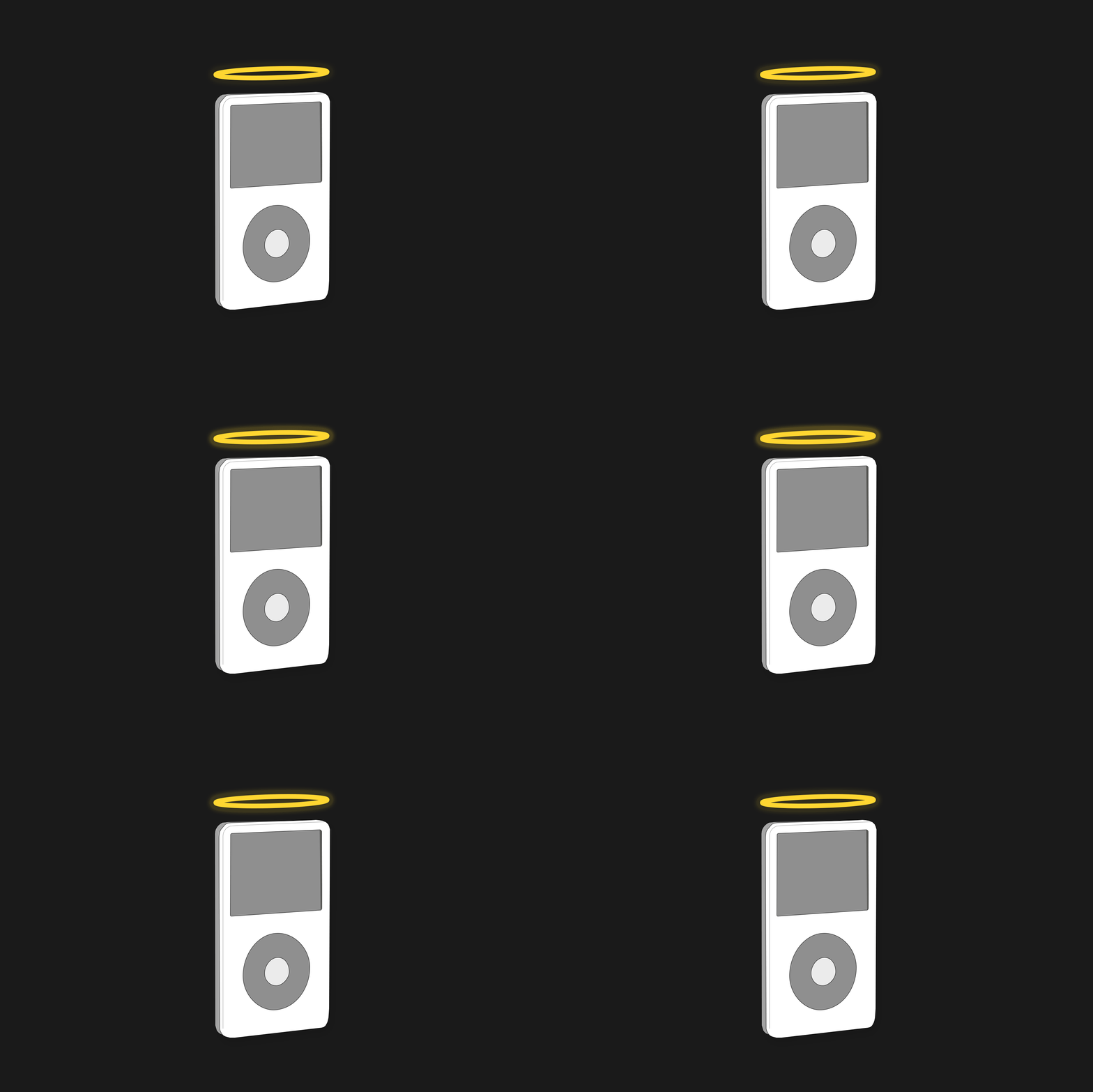
I’m not one to jump on the Next Big Thing, but I’ll admit I saw the recent trend of going back to using old iPods, and I got nostalgic. After all, it is one of the defining pieces of tech in the last forever, and I loved mine dearly.
I thought about cancelling Spotify. In truth, I’d love to.
But then, I remembered how most of my music back then was pirated (shhh, don’t tell) and I no longer have it stored anywhere, that having to sync the device through iTunes was cumbersome, and how I’ve come to depend on the convenience of having the entire catalogue of music in a single app for the frankly obscene price of £19.99 a month.
Why do I want to cancel Spotify, you ask? Well, it’s a pretty shitty company that doesn’t pay artists enough (at least those outside the top 1%), seems all too happy to have AI artists and music juice its numbers, and the owner is a twat. But then, is Apple any better? Would I go back to a device that was made in sweatshops akin to labor camps?
All this has got me thinking, when did using tech products and services become such a juggling act of trade-offs? Or has it always been this way?
Almost every device, service or software comes with compromises, and it’s a constant battle with what you can tolerate against your morals and values, and to what level. Are you down with the sweatshops, but against privacy invasion? Are you all for a bit of global-scale data theft, but not okay with the billionaire owner sticking his nose into politics? Are you fine with AI undressing women without their consent, but against it stealing jobs?
I use a smartphone, even though I know the workers who make them are overworked and underpaid, and that these devices are designed to break and then live out the rest of their days clogging landfills. Yet, I wouldn’t buy an AI device because it’s an invasion of privacy and a barrier to human connection. In the same breath, you could argue these concerns also apply to smartphones and the apps on them. So why have I made peace with that?
Years ago, I drew the line with Meta. I have been off Facebook for over 10 years now, and have never had an Instagram account. But I do use WhatsApp — also owned by Meta — because it’s convenient. I also use X, owned by one of the biggest ding dongs in the world. Does that cancel out my moral stance? It certainly makes me hypocritical.
I don’t use TikTok because its algorithm is digital crack cocaine, and I don’t need that in my life. There’s also the smallissue of it being Chinese-owned. But, I do use YouTube, even though its goals are almost certainly to create as addictive an algorithm. And is it really better if it’s owned by Google, which influences governments with its money and power, and enjoys an illegal monopoly on search and digital ads?
I don’t have a fancy camera doorbell because it’s essentially just spyware, and I refuse to buy “smart” appliances like the damn fridge that lets you look into it instead of opening the door, but I do have a smart-controlled heating system and a robot hoover. Each is likely sucking up data, and I wouldn’t be surprised if smart devices I do own were surveilling me in some way. What’s the reasoning behind my choices here? No idea.
Each to their own. There’s nothing wrong or right here. But it is pretty damning that almost no modern tech comes without drawbacks, and it’s been left up to us, the consumers, to decide how much we can stomach.
With AI, this is only going to get worse. As it continues to be stuffed into every product and service, the compromises will get bigger and harder to swallow. We will now have to consider the burning of resources, the theft of art, music, writing and more, the impact on jobs, the data and privacy concerns, hallucinations, rogue activity and more. The last few attempts at AI hardware devices have been an interesting experiment in where the line is with our collective morals and values — they were almost a unanimous “oh hell no.” But that same majority will go back to using their smartphones that track their every move, talking to an Alexa that listens to every word they say, or scrolling through feeds engineered to keep them hooked.
The question is, what choice do we really have? Tech is so integrated into our lives that at this point, you either have to make some of these compromises or build yourself a log cabin in the woods and go off-grid. (Yes, it sounds lovely, but for the 99.99%, it’s not a practical or possible endeavour).
If you want to stay within society — you know, to live, to work, to engage with people, to pay bills, shop, interact with culture — disconnecting from technology is not an option. And that leaves us making these strange, contradicting choices.
At least we are more aware of this now. There are growing movements to limit screen time, to make phones and devices less distracting and attention-demanding, to use devices that are not connected to the Internet, and to return to books, magazines, and non-digital forms of entertainment and pastimes.
Perhaps many have reached the breaking point. Or maybe this is just a small way to help us make peace with all those compromises

I feel your pain dude. Sometimes I think we would be better off reading paper books only, and limiting our online interactions to what we can do with an old laptop with Linux in it.
The really ironic thing is, that "pirating" is illegal but all the big companies pirate now absolutely everything when training AI and that one is legal. Best stunt ever.
My personal opinion: so-called pirating does/did not even 1/1000 of the harm that Spotify does. Those artists (on that platform) get paid nothing really. Better you pirate and buy their albums from time to time or buy concert tickets. Helps them much more.