
Using Your Brain Was So Pre-AI
So says the desperate AI industry

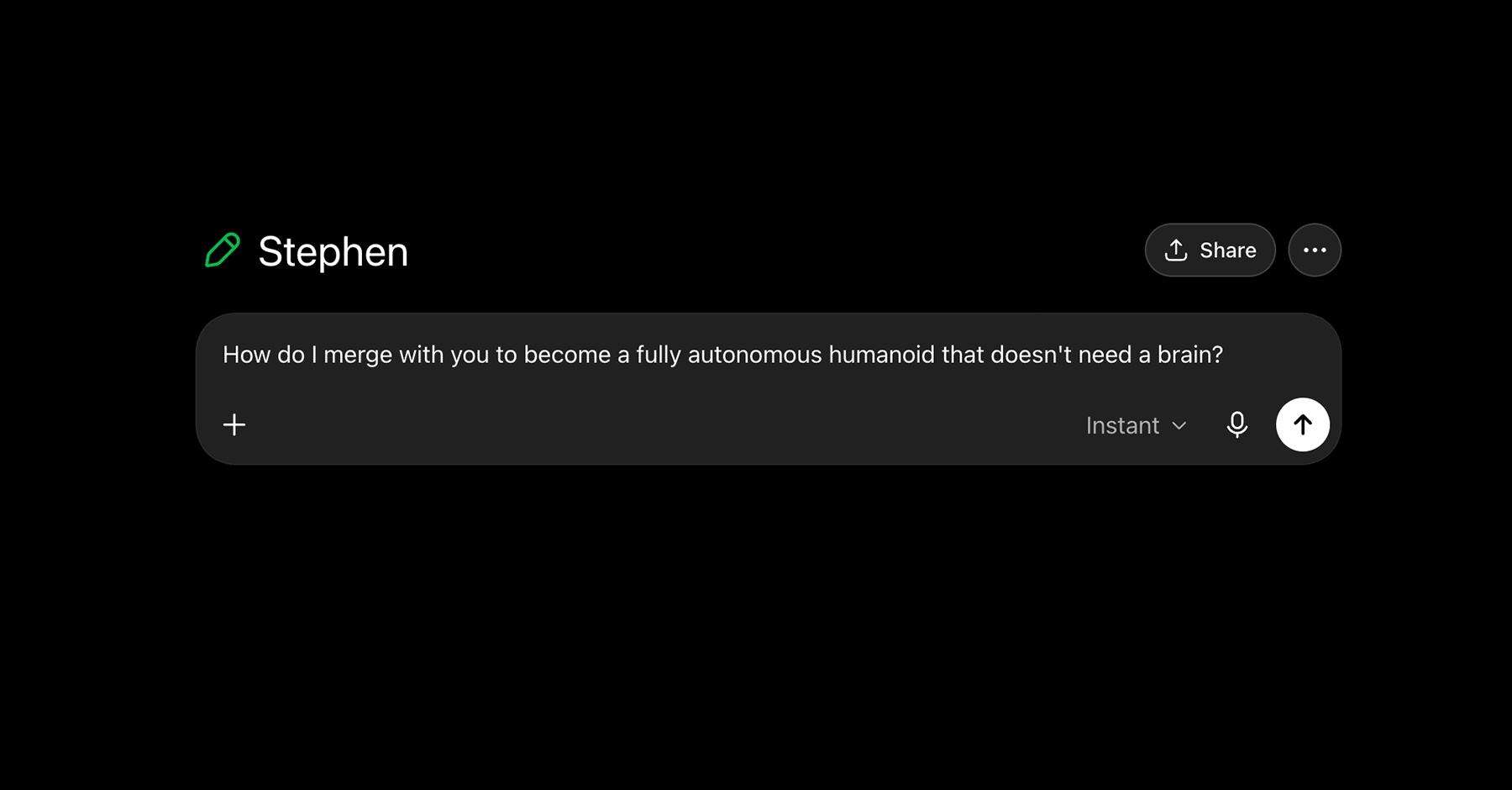
When you open your emails, work on a doc, browse the Internet, look at Slack messages, or use almost any app or SaaS product, you’ll be met with some form of shiny butthole-adjacent button, pop-up or disguised chat bar, begging you to offload your brain work and engage with the latest, life-altering AI features.
I call this AI stuffing. The act of pushing AI features nobody asked for, regardless of the impact it has on the user experience.
While it highlights the lack of forward-thinking at the top of the food chain in Big Tech — oh, look, the new shiny object! — it’s also a sign of the increasing desperation at play, the collective brainwashing, the sense, or maybe the dawning realisation, that whole industries and the stock market are propped up on technology that really isn’t making that much of an impact.
Trillions of dollars. Displaced jobs. Data and catalogues of writing, music, art, research and more stolen without compensation. A mountain of resources burned, and yet the promised revolution is nowhere to be seen, and profitability still remains a pipe dream for the main AI companies who require billions of capital just to pay their cloud computing costs. That's a lot to get to where we are right now, where AI is nothing more than a useful tool. But that comes with an important caveat, one that the industry is now overstepping as the desperation ramps up — tools should come with choice and with autonomy. Tools should be there when you need them, not lurking, not nudging, not appearing at random behind buttons, not disguised as search bars, not as pop ups, not as prompts.
At first, AI features was adoption by stealth. Companies were subtle, almost sneaky, and we saw a slow introduction of things we didn’t ask for. At least at that point, they stayed in their place, only there when we wanted to engage with them. Now it’s just blatant, brutal, heavy-handed forcing the features upon us, and result is that most software is worse, harder to use, more expensive to use (and run) and nothing more than a training resource for LLMs.
The motive is clear. The tech industry needs you to use AI, and then it needs you to get hooked on AI. That, at scale, is one of its only ways to profitably: big deals with major corporations and governments, entire business systems propped up by it, and millions of monthly paying users. Even then, the maths will likely not be enough — read this from Ed Zitron.
But don’t kid yourself, the incentive isn't to help you think better. It's to increase AI usage.
The tech industry would rather you stopped writing your own emails. It would rather you stopped writing or creating much of anything. Every email drafted, every prompt submitted, every document summarised, every song generated, every piece of “art” produced out of thin air, every task you hand over is another habit formed, another dependency created, another justification for the billions already spent.
Sam Altman and co don't want you to think for yourself. They want you to automate all of that, everything from the mundane to the madness, and they want you to become entirely dependant on that automation. The industry doesn’t want AI tools to become your second brain, it wants them to work as your brain. It wants the easy, quick, generated route to become so intertwined in your work, in your relationships, in how you engage with the world, that it becomes difficult to turn away from it. That’s the tipping point when they can wire your brain activity to a $20 subscription fee (or whatever number it will have to eventually be) and, from there, multiply by that by as many suckers as possible.
I don’t mind AI as a tool, but it has to act like a tool. The best tools disappear into the background until you need them. A hammer doesn’t leap into your hand every five minutes. Spellcheck doesn’t interrupt every sentence asking whether you’d rather let it finish your thought. A calculator waits until you open it to start making calculations.
That’s the relationship software should have with AI. It should be quiet, available and optional.
If AI is genuinely as useful as the industry claims, it shouldn’t need to be forced into every search bar, every document, every email and every corner of our attention.
We’d choose to use it because it solved real problems.
And that says it all.
